
504 Plan & IEP Accommodation Support for Students
Navigating school-based accommodations while managing a health condition, learning disparities, or emotional challenges can feel overwhelming for both students and parents. Our practice offers 504 plan evaluations and IEP accommodation recommendations to help students access the support they need to succeed academically. With over a decade of experience working within the educational system, Jaclyn brings hands-on expertise in coordinating evaluations, recommending classroom adaptations, and advocating for students’ educational rights.
What Is a 504 Plan?
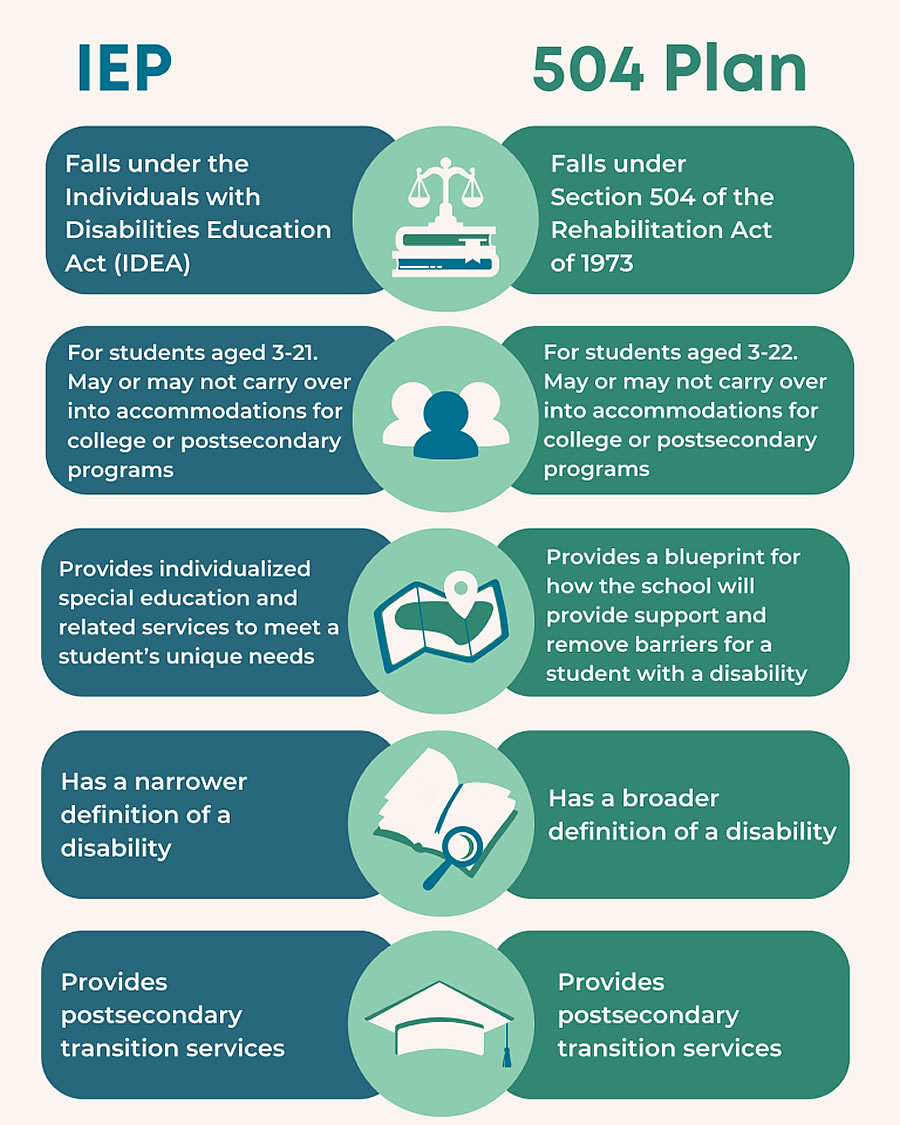
A 504 plan is a formal agreement that outlines accommodations for students with a mental or physical impairment that substantially limits one or more major life activities. It ensures students have equal access to education by removing barriers that could otherwise interfere with learning.
What Is an IEP?
An Individualized Education Program (IEP) is a legally binding document created for students with disabilities, ensuring they receive a free and appropriate public education tailored to their individual needs. Developed under the Individuals with Disabilities Education Act (IDEA), an IEP outlines specific educational goals, specialized instruction, related services, and necessary accommodations. It is created collaboratively by a team that includes educators, parents, and specialists, and is reviewed and updated regularly to reflect the student’s progress and evolving needs.
504 Plan vs. IEP: What’s the Difference?
- An IEP provides specialized instruction tailored to a student’s learning needs.
- A 504 plan focuses on removing barriers to learning rather than providing specialized instruction.
- Both are designed to support students, but they differ in scope, legal framework, and the type of support provided.
What School Accommodations May Look Like
- Extra time for test-taking and turning in assignments
- Private, low-distraction settings for testing
- Modified classroom seating
- Assistive technology to help students remain in the general education setting when appropriate
- Strategies to support mood regulation, such as time away from the group to de-escalate
- Extra time to transition between classrooms
- Increased communication with instructors to clarify assignment expectations
Why Advocacy and Evaluation Matter
Advocating for your (or your child’s) educational experience is essential. Many students find learning and socializing especially difficult when managing emotional or developmental challenges, and unaddressed barriers can make school increasingly difficult to navigate over time. Taking action early through evaluation, accommodation planning, and ongoing advocacy can make a lasting difference in a student’s academic success and confidence.